A Common Thread
Around the middle of 2019, I started making the equipment around me speak one electrical language. I built a USB Power Delivery sink controller, then converted more and more of my equipment to USB-C. The point was not the connector itself. It was being able to reach for one cable and one power supply with some confidence that things would work together.
Quite by accident, I have done the same thing mechanically. The interface is the ordinary camera tripod thread: 1/4″-20 UNC. Once I noticed the absurd range of clamps, ball heads, quick-release plates and articulating arms built around it, I stopped treating them as camera equipment. They are a mature box of mechanical parts that happen to have escaped from photography.
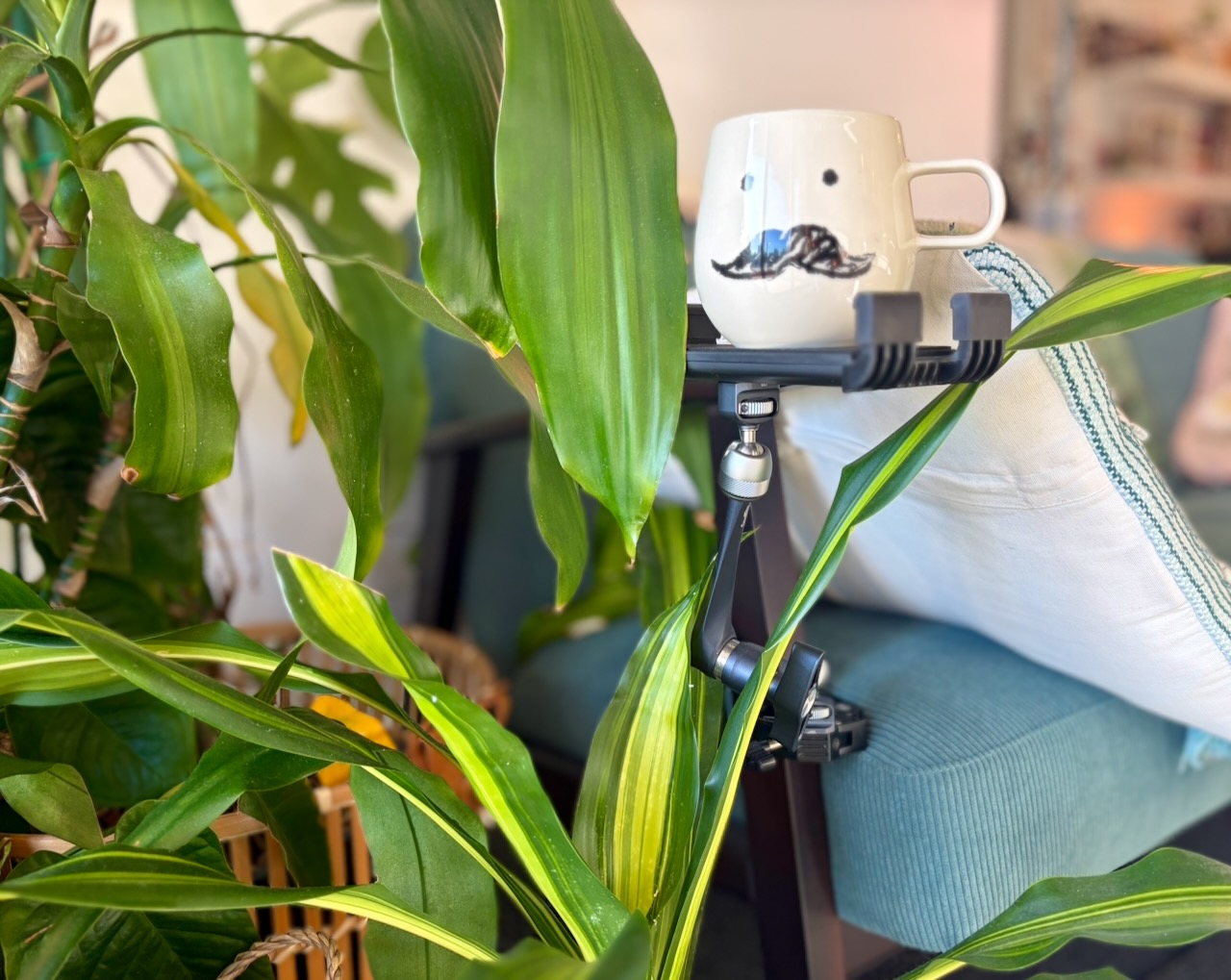
No camera in sight. An arm keeps my cup within reach without consuming a surface.
A mechanical USB-C
The smaller camera thread has a nominal 1/4-inch diameter and 20 threads per inch in the Unified National Coarse series. Together with the larger 3/8″-16 thread, it is specified by ISO 1222 for connecting cameras, tripods and accessories. The interesting part is everything that followed: decades of compatible gear designed to hold a load, put it at a useful angle and stay there.
That ecosystem is far more useful to me than another bespoke bracket. A new project only needs to expose the thread. I can then choose an existing arm, clamp or plate, change it later, or borrow a part from another setup without redesigning the object.
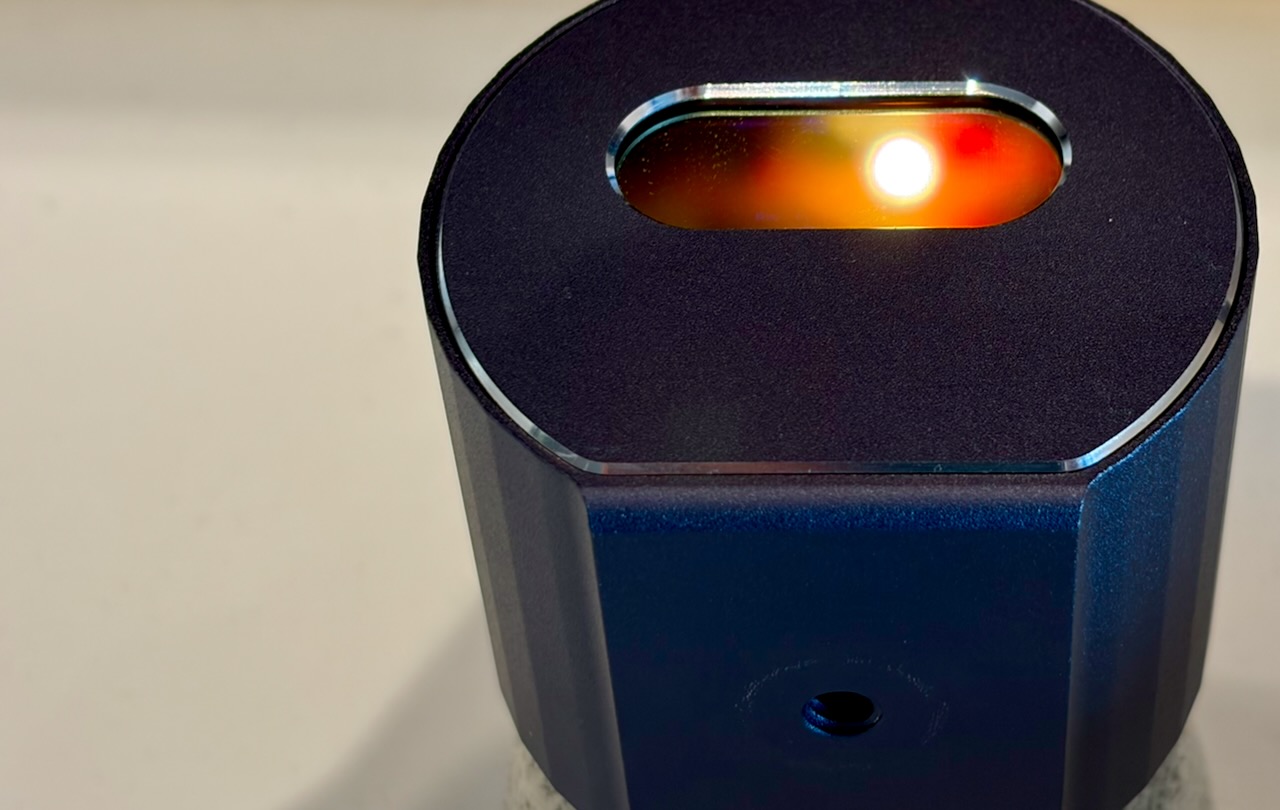
A 1/4″-20 socket gives the LaserPecker LP1 access to the same ecosystem.
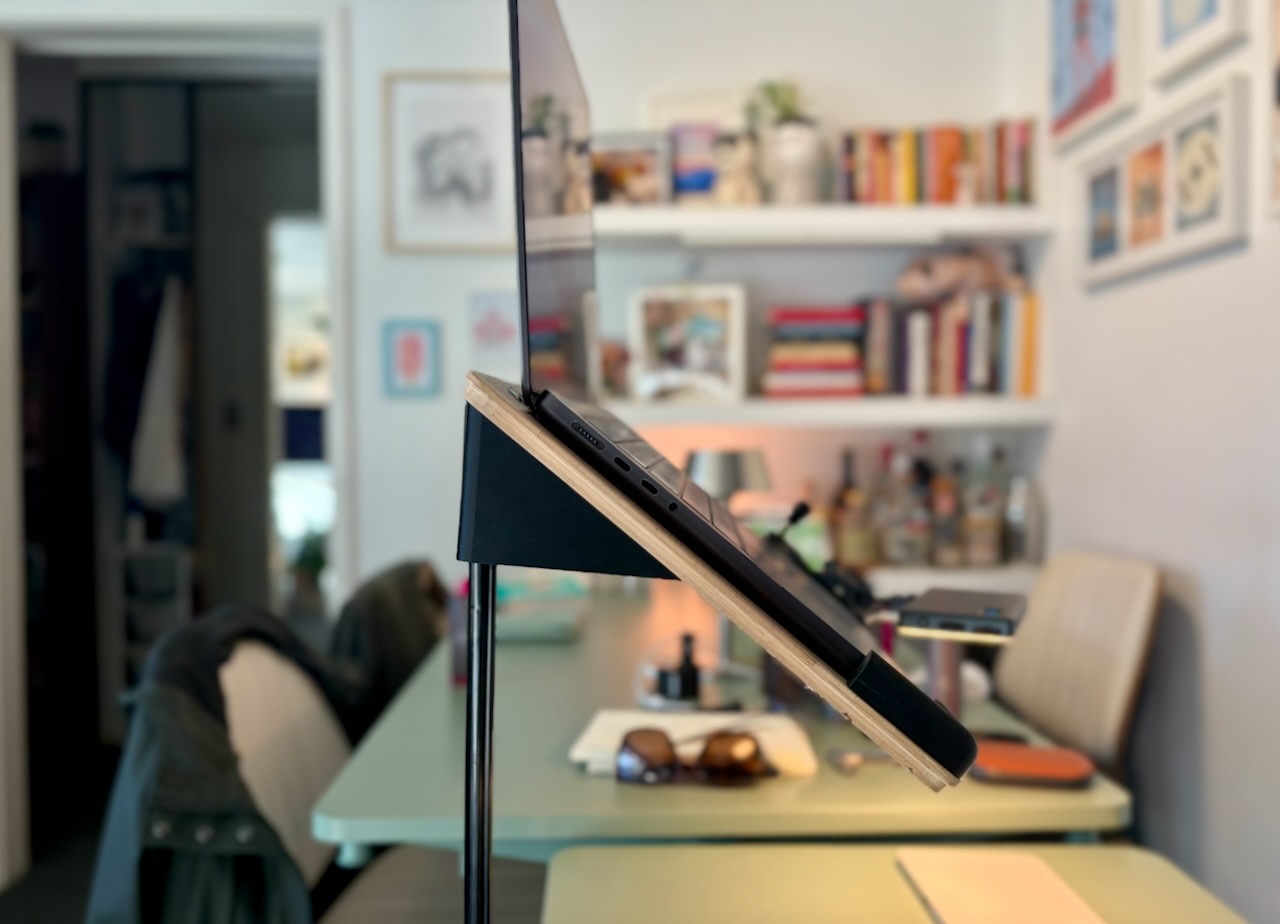
My laptop platform is another endpoint. The stand beneath it can be replaced without changing the platform.
Drill, then tap
Converting an existing object is wonderfully uneventful. In material thick enough to hold a useful thread, I drill the appropriate tapping-size hole and run a 1/4″-20 UNC tap through it. Drilling makes the hole; tapping is the term for cutting the internal thread. In thin or brittle material, a threaded insert or a through-bolt is the honest solution instead.
The luckiest conversion was an IKEA STÄNKREGN LED ring lamp (005.421.54). Its proprietary pivot hole was already exactly the right size. I removed the original stand and screwed a camera mount into the plastic, cutting the thread as it went. It looks as if it was designed for the little tripod, although neither manufacturer had the other in mind.
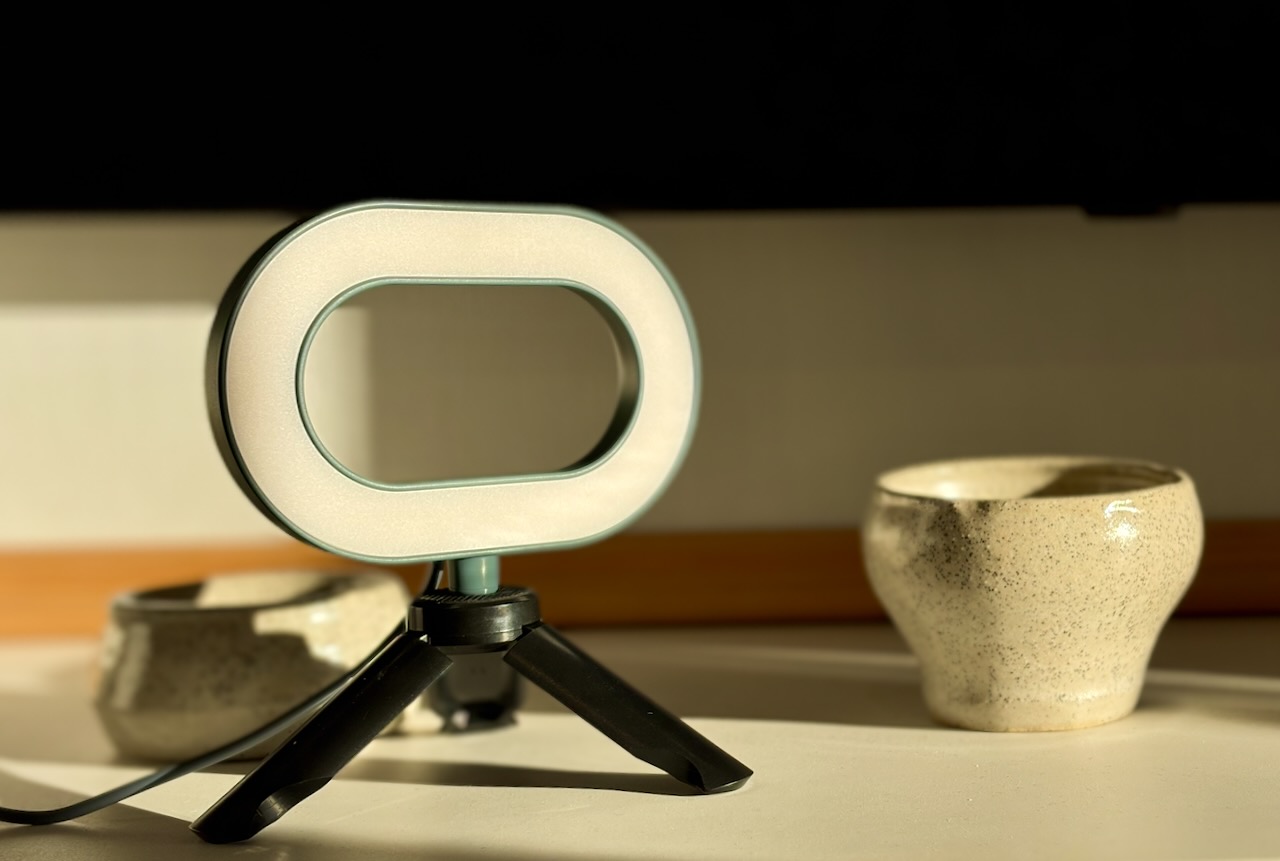
The STÄNKREGN on a small tabletop tripod, with no adapter in between.
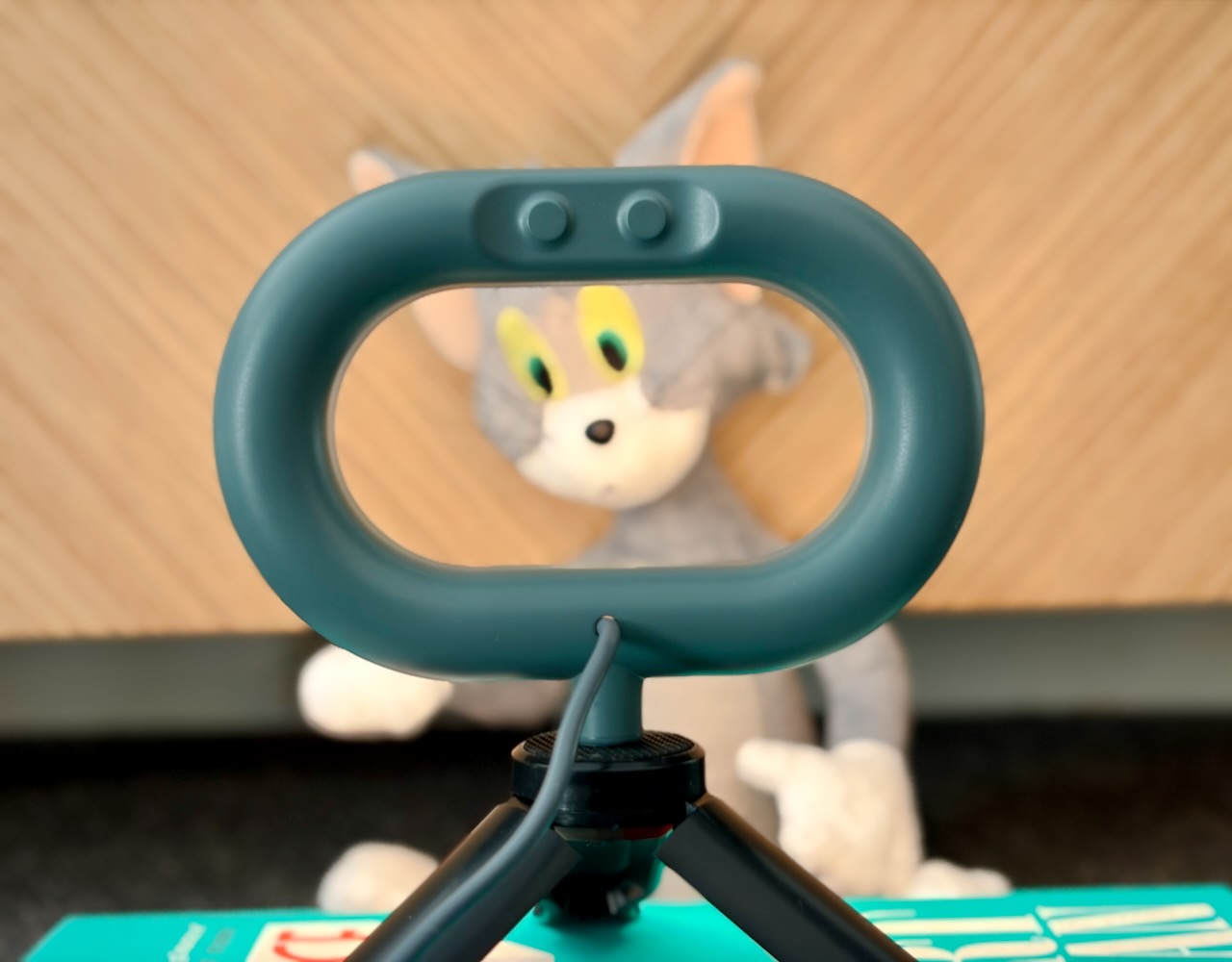
The original pivot became a camera-mount socket. Tom appears to approve.
The missing constraint
The plain thread has one irritating weakness: it is also an axis. An off-centre load applies torque around the screw, so a heavy light or long arm has to be tightened hard enough for friction alone to stop it rotating. That works, until it doesn’t.
Then I found the refinement I had been missing: a 1/4″-20 locating screw with two retractable anti-twist pins, commonly described as ARRI locating pins. The SmallRig arm I use calls them exactly that. On a plain surface the pins retract and the ordinary screw still works. Give them two matching holes, however, and the screw supplies the clamping force while the pins take the torque.
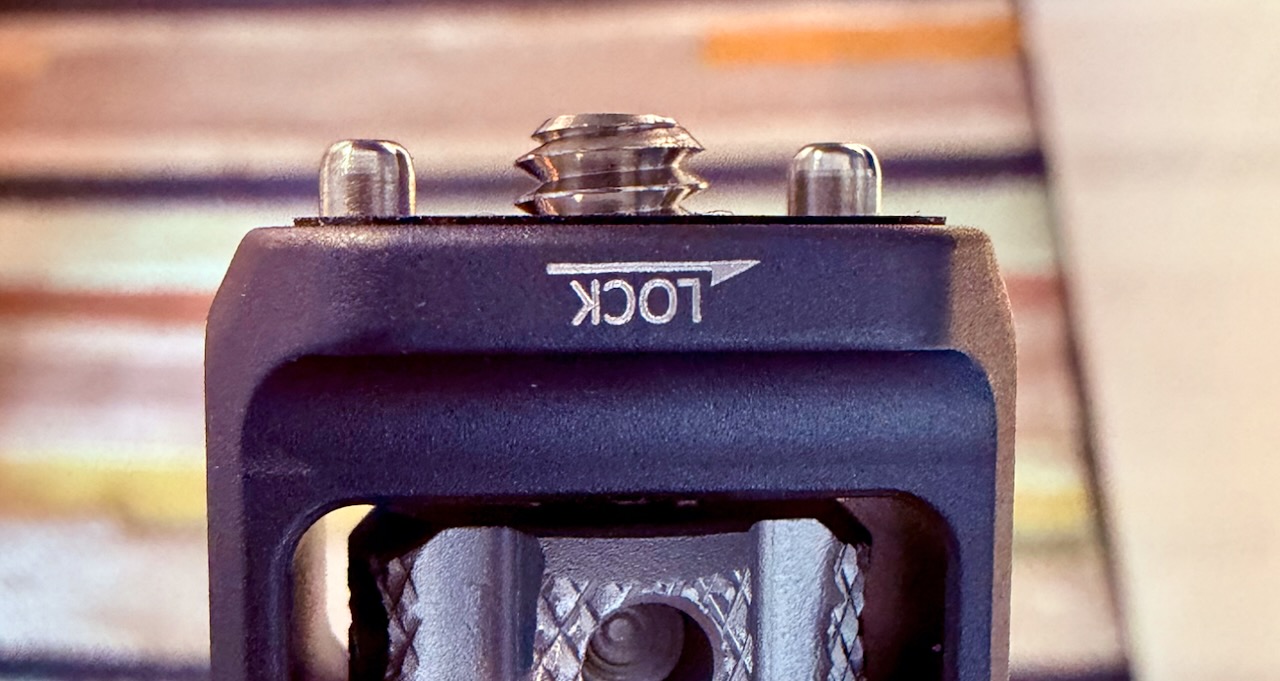
The centre screw pulls the parts together; the two spring-loaded pins stop them rotating.
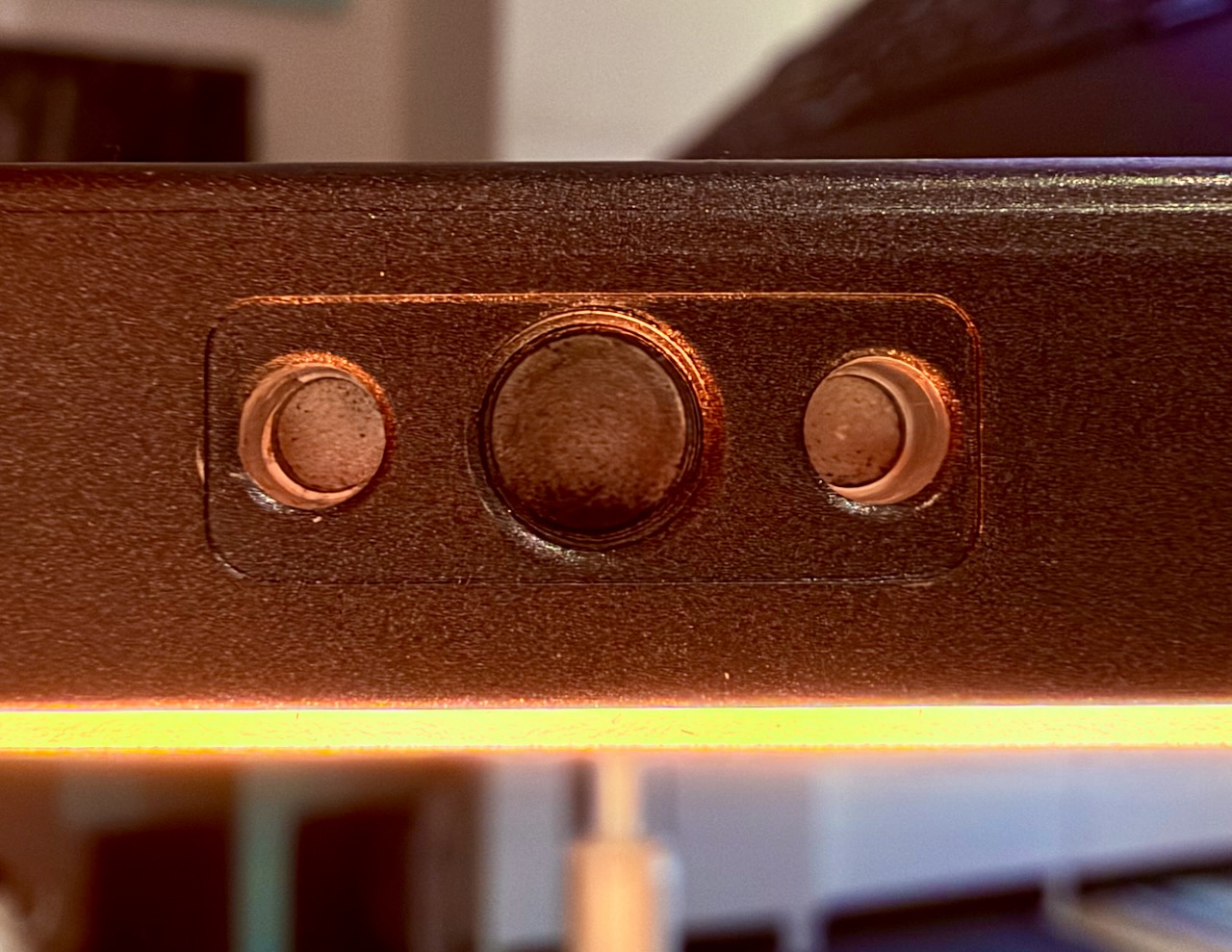
The matching socket is still an ordinary 1/4″-20 mount, with two small holes added for the locating pins.
Once I understood the arrangement, I added the two locating holes to the mounts I had already made. This is a particularly nice extension: old and new parts remain compatible, but parts that know about the extra holes get a much stronger connection.
Once everything speaks the same language
The camera catalogue now supplies the joints for my lights. A compact panel can sit beside or above the laptop, then move out of the way with one lever.
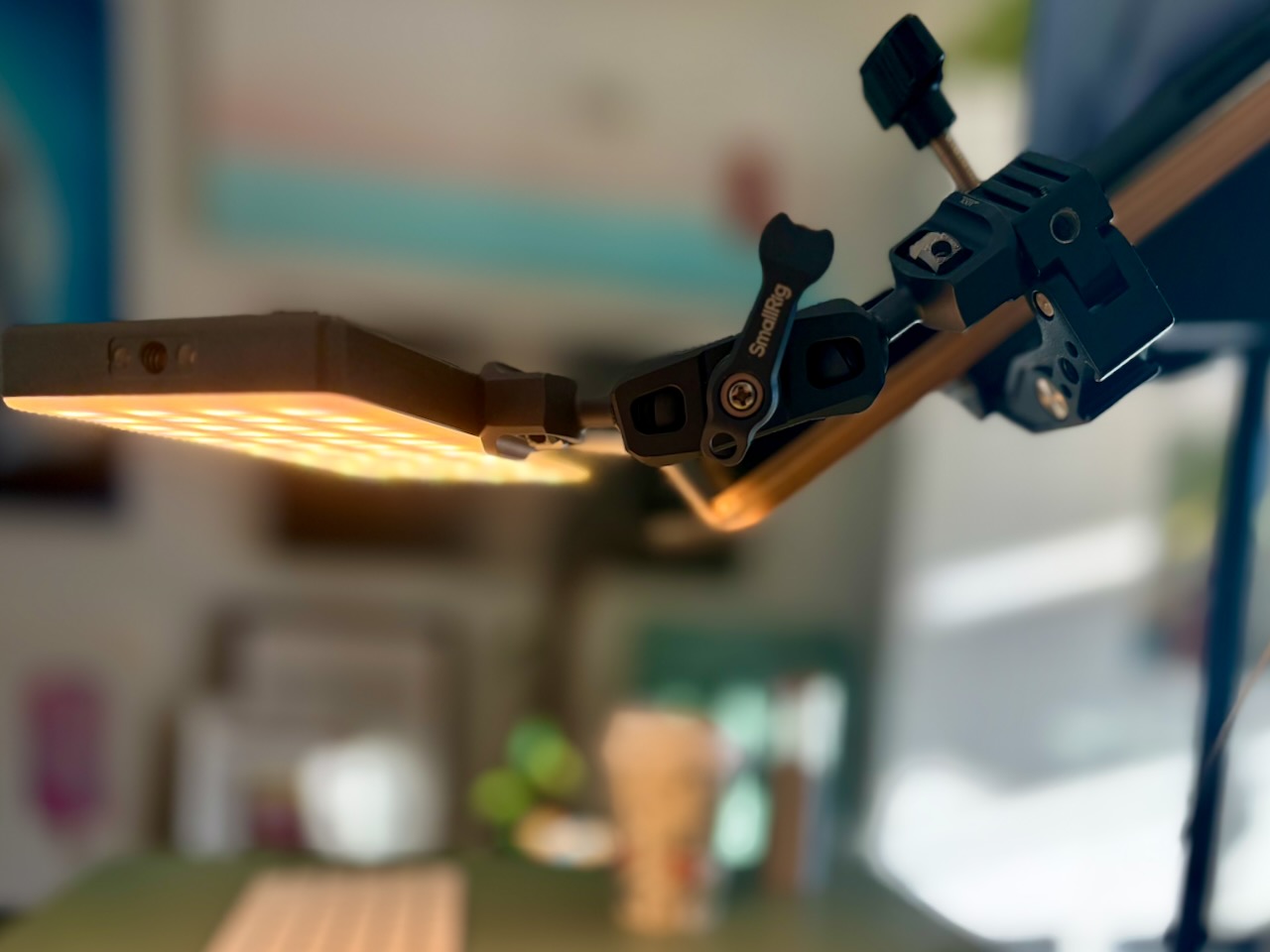
A clamp, an articulating arm and a small LED panel become a desk light.
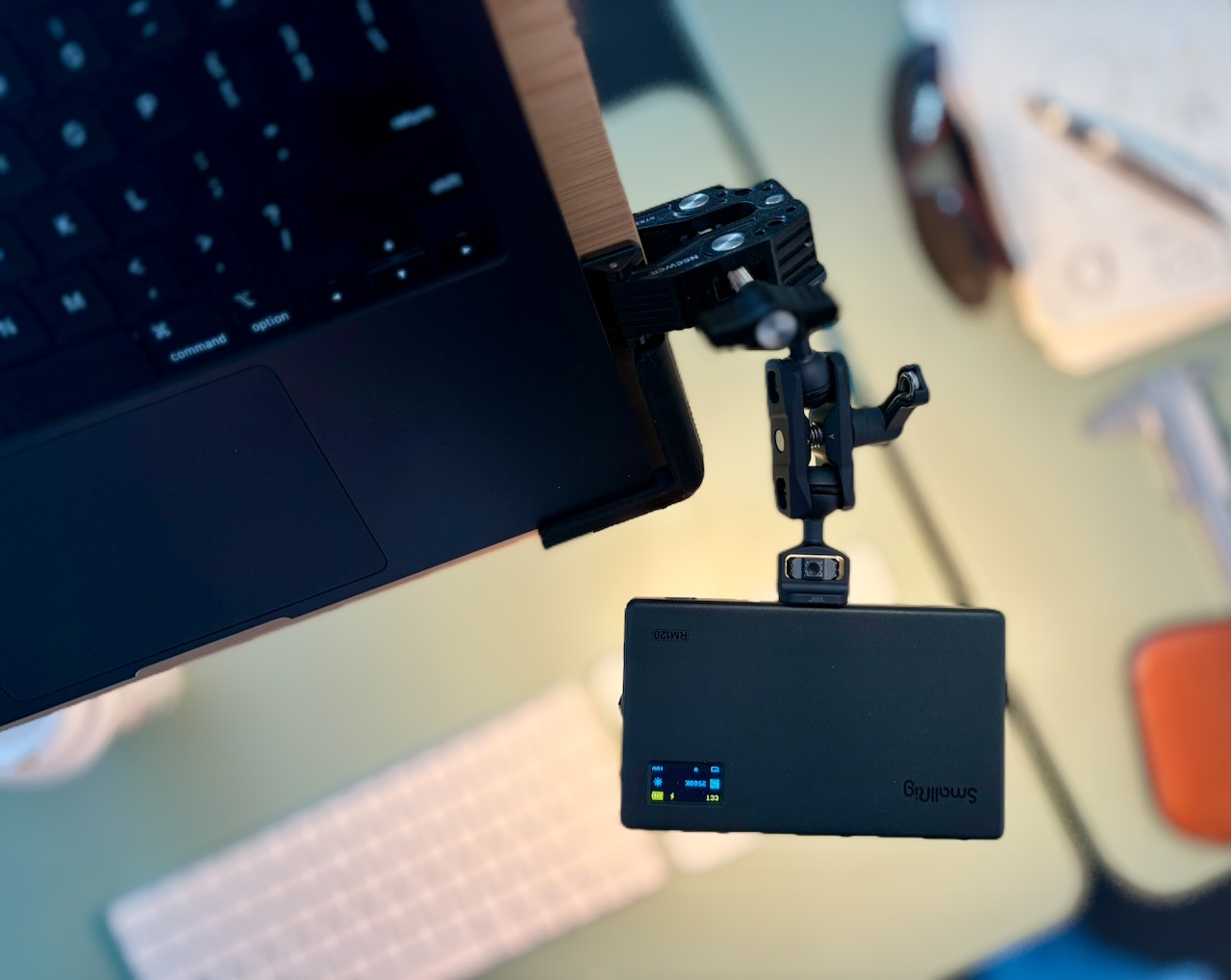
From above: the same arm puts the light exactly where the work needs it.
The same parts scale to a much larger LED panel. The light, arm and cabinet clamp remain separate, replaceable objects; the thread is the only agreement between them.
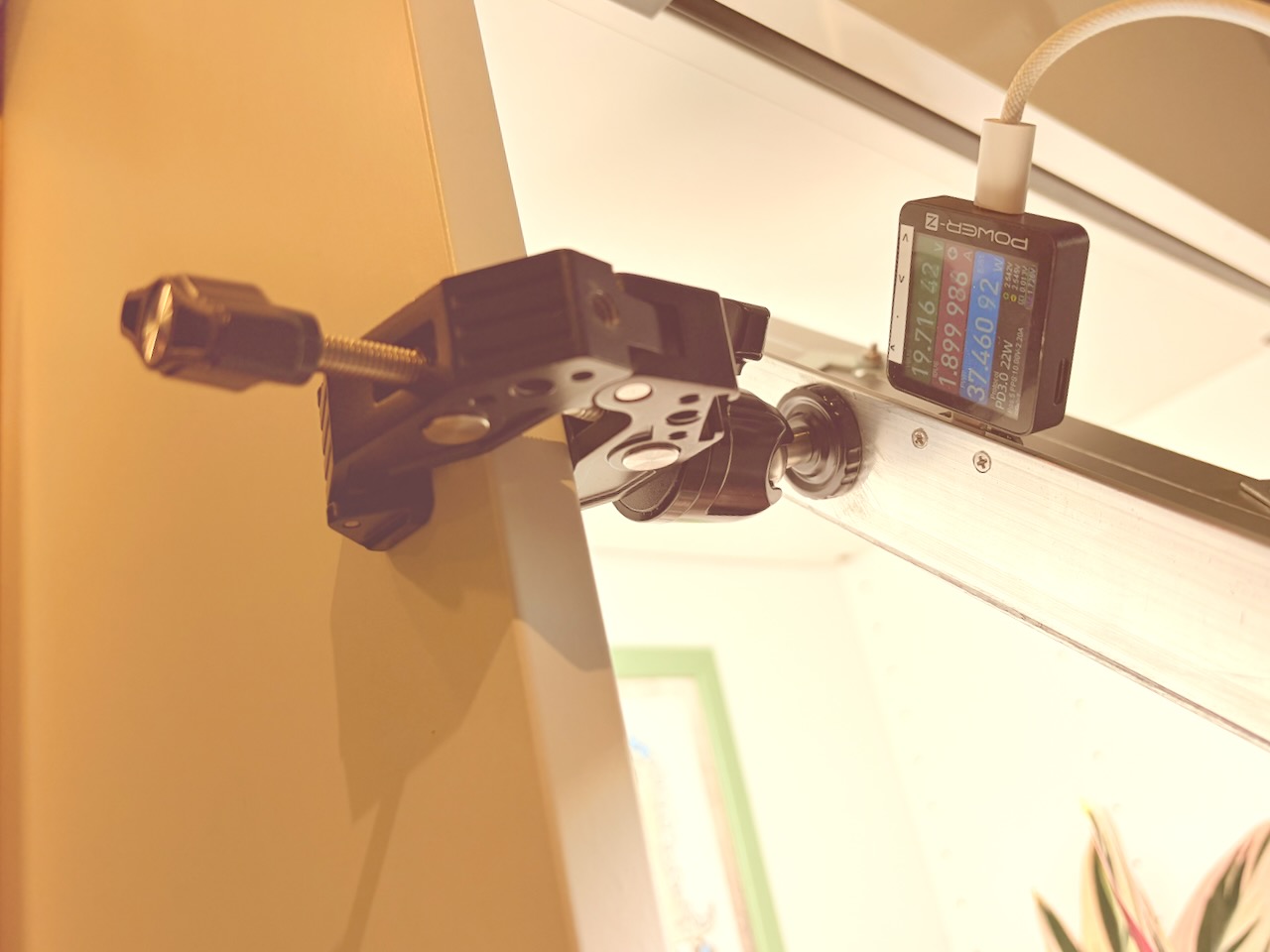
The back of the larger light: clamp, ball head, 1/4″-20 socket and USB-C power.
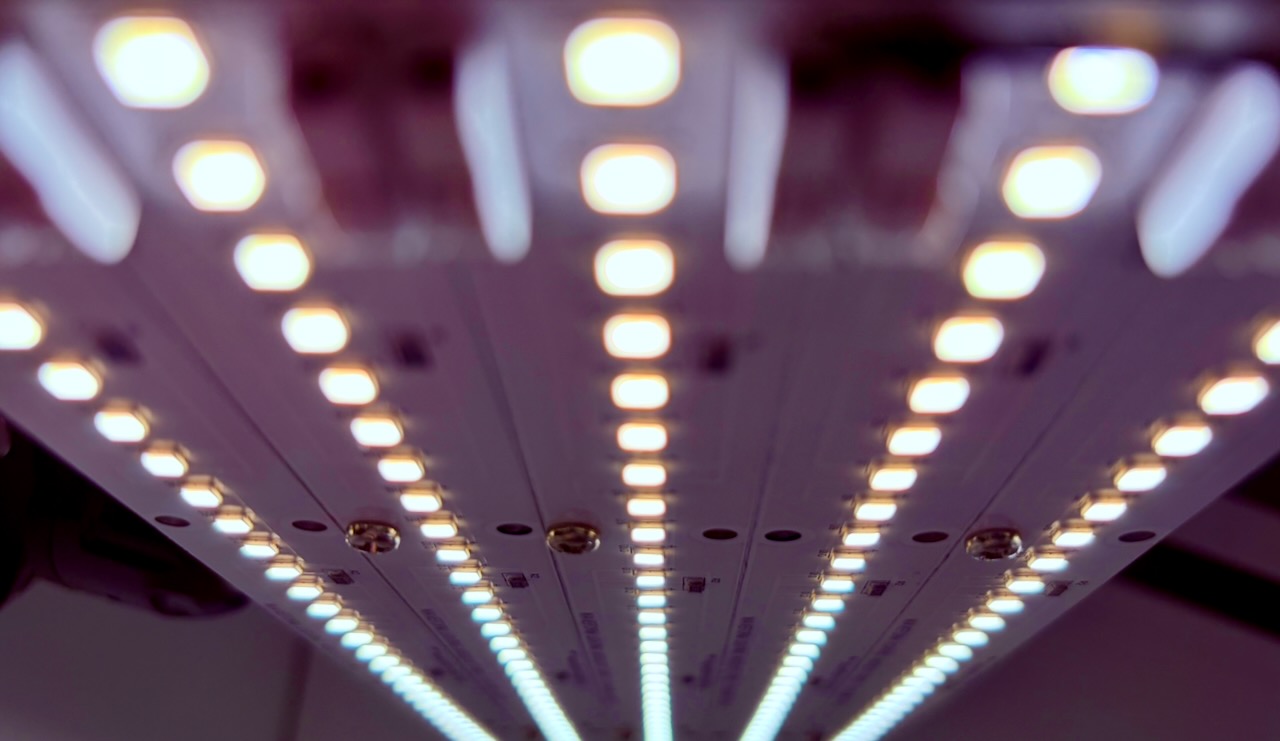
The useful side of the same panel.
Foresight without prophecy
I love a simple design that remains useful far beyond anything its makers could have predicted. That is not luck. Luck was the hole in the IKEA light. Foresight is putting just enough constraint into an interface that people can adapt it with confidence, while leaving paths open for uses and improvements that do not exist yet.
The camera industry did not need to foresee my cup holder, laptop platform or apartment lighting. It only had to hold a diameter, a thread pitch and a mating surface steady for long enough that an ecosystem could compound around them. Later, two optional holes improved the connection without invalidating the original one. That is excellent design: decide what must stay fixed, and leave the rest of the future alone.
USB-C gave my equipment a common electrical language. The 1/4″-20 thread has quietly become the mechanical one.