Ryobi 18V Cigarette Lighter Adapter
I wanted an easy way to get useful power out of my Ryobi batteries without building another power supply. So I put a car cigarette lighter socket in a simple 3D-printed attachment and wired it straight to the battery terminals. That’s the entire circuit.
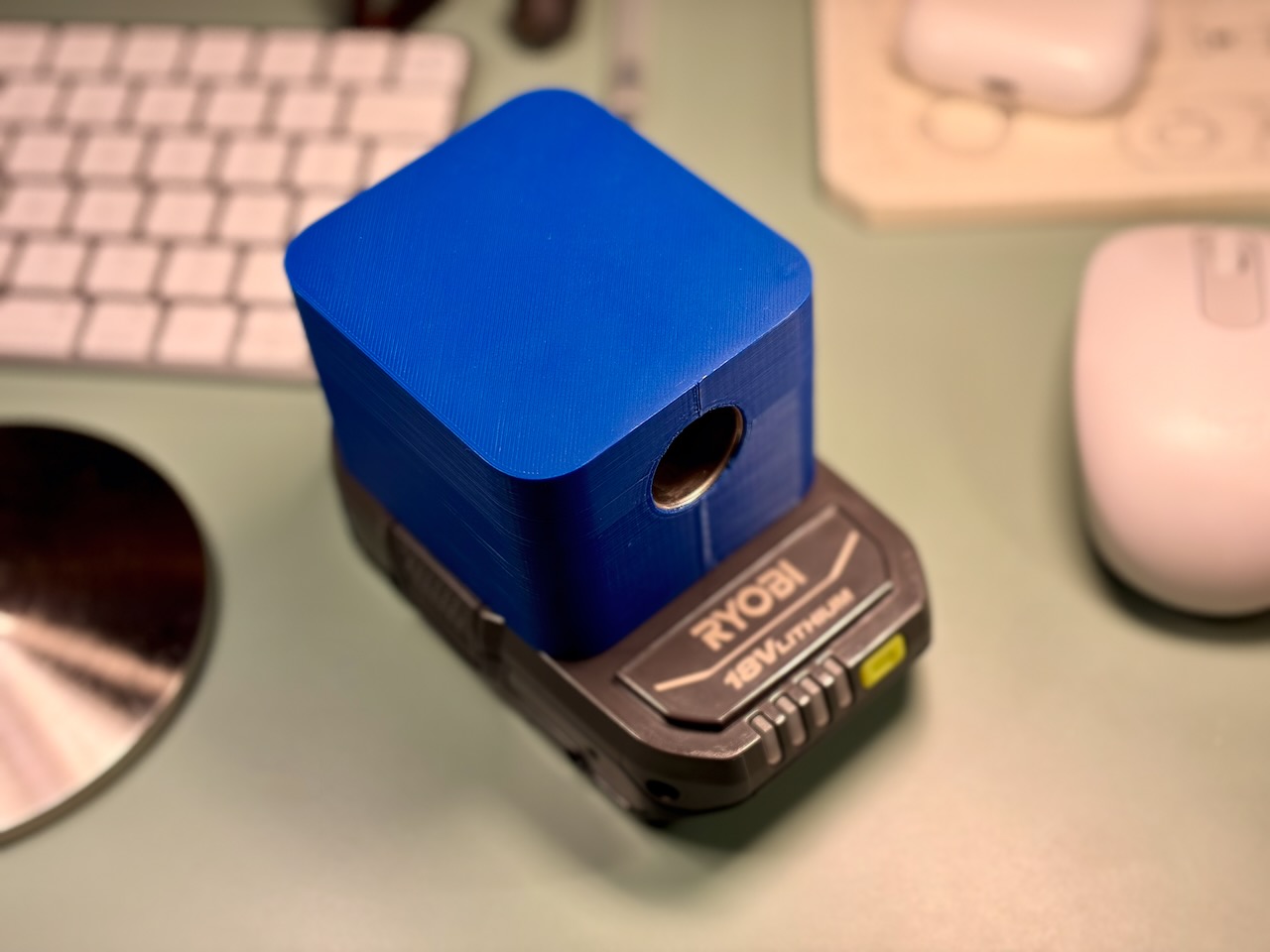
The socket is connected directly to the battery terminals. There is no voltage conversion hiding inside the print.
Why 18 V works
There’s a small correction to the folklore here. This isn’t really a regional 12 V versus 24 V split, and there isn’t one worldwide cigarette lighter standard. SAE J563 covers the familiar cigarette-lighter-shaped outlet for nominal 12 V systems. Vehicle voltage follows vehicle class more than geography: 12 V is usual for passenger cars, while 24 V is common in commercial vehicles and buses.
Accessory makers sensibly want to sell the same charger for both. Many car chargers therefore accept a continuous 12–24 V DC input; here’s one ordinary USB-C example. A Ryobi pack is 18 V nominal and reaches about 21 V when fully charged, which sits nicely inside that range. The car charger still does all the regulation and USB-C negotiation; my adapter merely connects it to the battery.
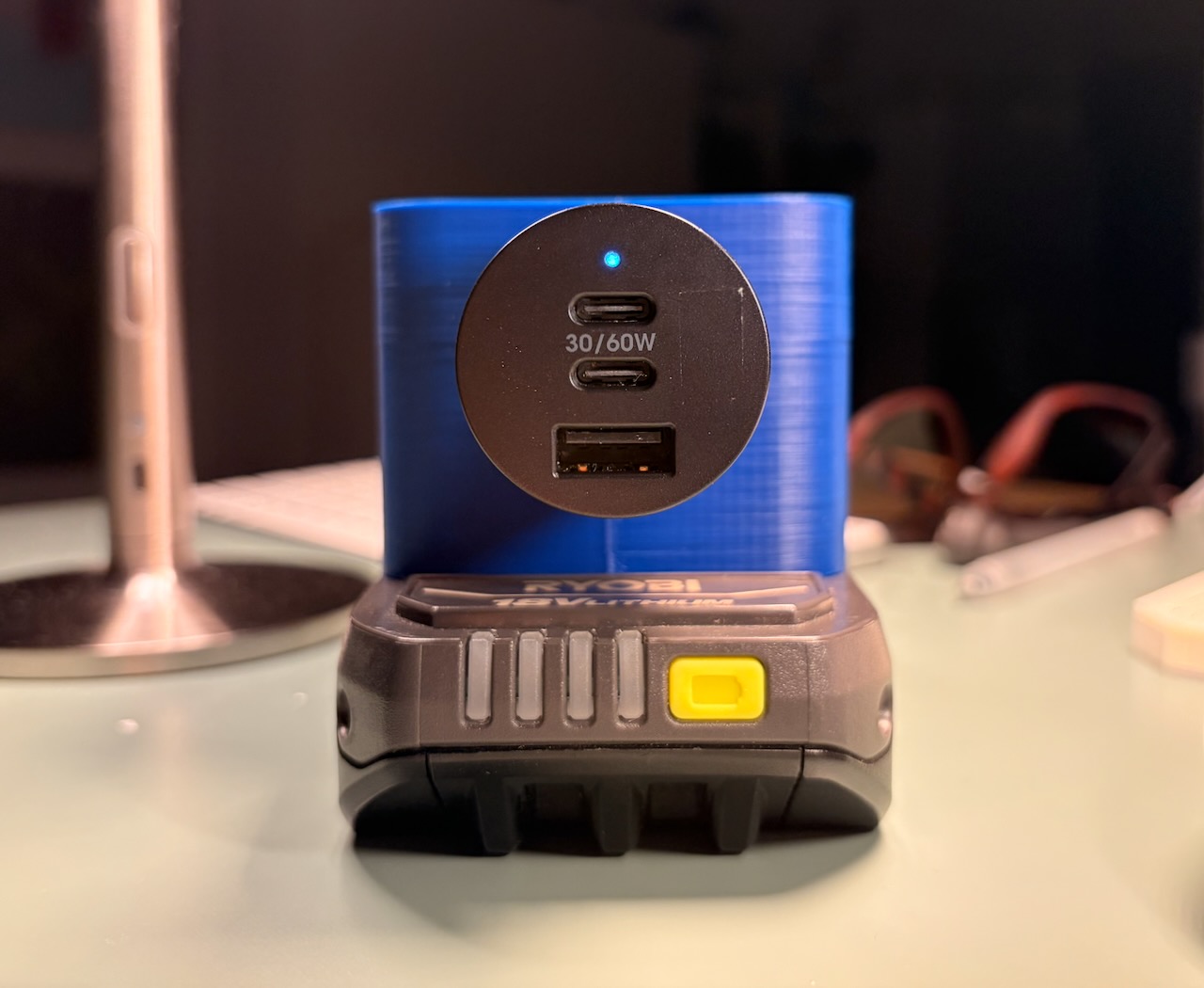
An ordinary wide-input USB-C car charger plugged straight into the adapter. Always check its input rating first.
Design Philosophy
The adapter is an argument for interfaces over reinvention. It creates no new capability; it simply makes two mature objects legible to each other. That restraint gives it its feel: a quiet, archetypal block that turns the battery into a base and the inserted accessory into a face, resolving loose parts into a finished personal tool without pretending to be an appliance in its own right. Its completeness is deliberately local—one missing connection made solid, with the surrounding systems left to do what they already do well.
Useful, not safe
This adapter has no fuse, switch, socket cover or protection of its own. A bad plug or a piece of metal across the contacts can put a dead short across a battery capable of supplying a lot of current. I only use accessories whose stated input range includes the battery’s full voltage, and I don’t leave it attached or unattended.
It isn’t something I’d build into a permanent setup. But when I’m in a bind and need USB-C power, it turns a battery I already have into a very useful one.